
As part of a year-long collaboration between Dubai College, DesertBoard® and Abanos, Year 12 Design Technology students embarked on an innovative design challenge to create IKEA-inspired flat-pack chairs using DesertBoard PSB® (Palm Strand Board). The project took students through the complete design journey, from initial concepts and prototypes to CAD development and professional manufacturing at the Abanos factory.
Throughout the project, students developed their concepts through a series of design stages, beginning with initial sketches and cardboard models before progressing to detailed CAD drawings, assembly instructions and full-scale prototypes. The challenge encouraged them to look beyond aesthetics and consider the practical aspects of product design, including dimensions, assembly, manufacturability and material efficiency.
The collaboration provided students with the opportunity to work with a real engineered wood material and understand how material properties can influence design decisions. DesertBoard provided PSB® boards made from upcycled date palm fronds, giving students the opportunity to incorporate a sustainable engineered board into their designs while exploring its practical applications.
Once the digital designs were developed, the project moved from the classroom into a professional manufacturing environment. The Abanos production team transformed the students’ digital designs into physical components, using CNC machining and professional finishing processes to manufacture the chair elements.
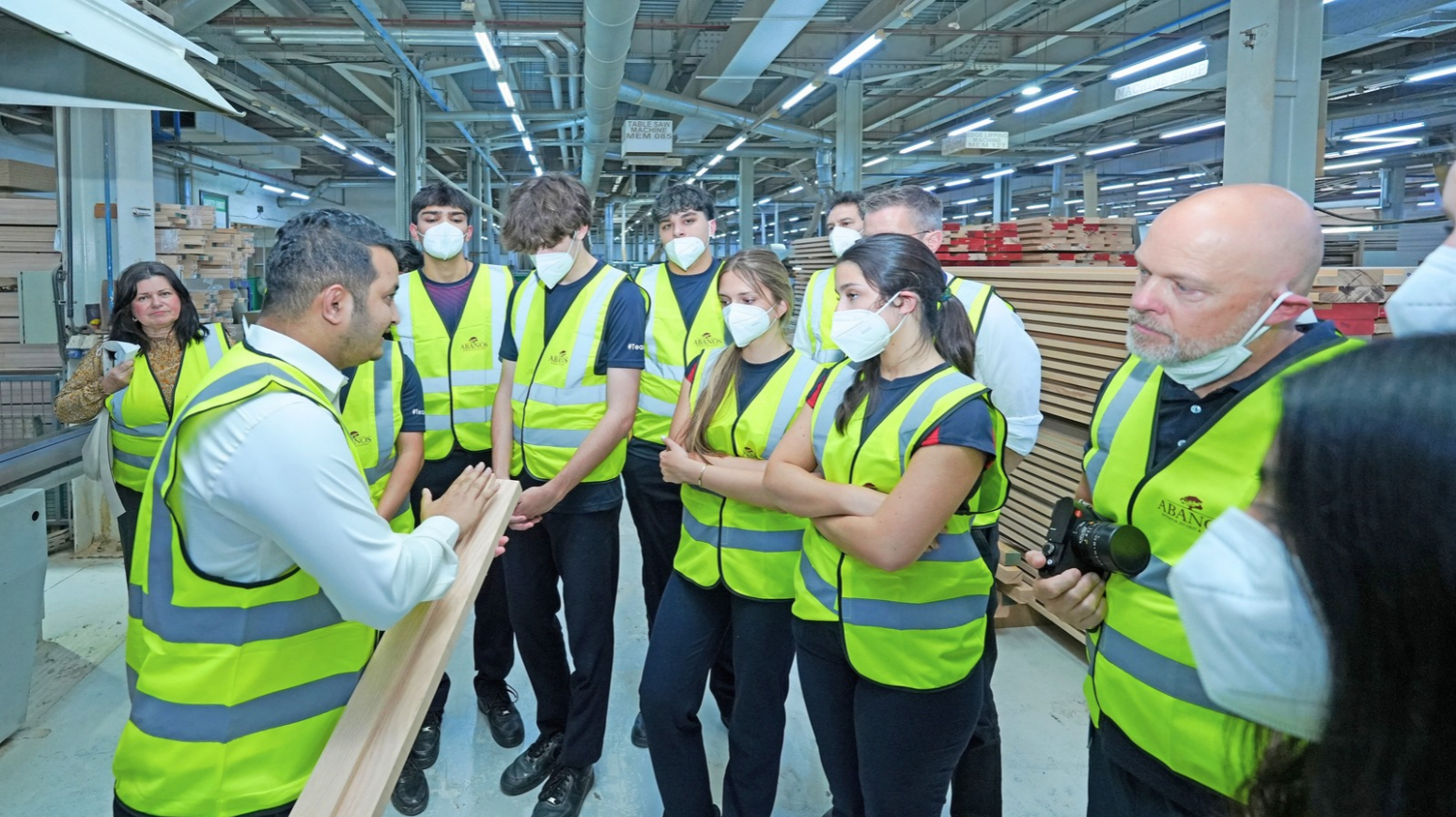
To experience this process first-hand, the students recently visited the Abanos factory, where they explored the production floors and gained insight into the various stages involved in turning a digital design into a finished product. The visit introduced them to CNC machining, finishing, quality control and the wider manufacturing process, providing a practical understanding of the considerations involved in producing components accurately and efficiently.
Seeing the machinery used to manufacture their own chair components gave the students a direct connection between the work they had developed in the classroom and its real-world application. It also allowed them to see how factors such as precision, material efficiency, assembly requirements and manufacturing capabilities influence the final product.
The project demonstrates the value of connecting education with industry, giving students an opportunity to experience the complete journey from concept and design through to manufacturing and prototyping. Rather than limiting the learning experience to theoretical design, the collaboration enabled students to see how their ideas perform within the practical constraints of a professional production environment.
For Abanos, the initiative reflects its commitment to supporting meaningful industry engagement and creating opportunities for students to gain practical exposure to manufacturing. By working alongside young designers and helping bring their concepts to life, Abanos aims to contribute to a learning experience that bridges the gap between classroom knowledge and real-world application.
The collaboration also highlights how partnerships between educational institutions and industry can provide students with valuable insight into the design and manufacturing process, while encouraging them to approach product development with greater consideration for functionality, sustainability and manufacturability.