
The Shift from Conventional to Engineered Joinery Solutions
The joinery industry is undergoing a fundamental transformation. What was once dominated by traditional carpentry methods and solid timber construction is now evolving into a highly engineered discipline — driven by performance demands, sustainability priorities, and strong market momentum.
According to IMARC Group (https://www.imarcgroup.com/engineered-wood-market), the global engineered wood market was valued at approximately 304.3 million cubic meters in 2024 and is forecast to grow to around 476.8 million cubic meters by 2033, reflecting widespread adoption across construction, furniture, and interior sectors worldwide. At a regional level, Grand View Research (https://www.grandviewresearch.com/horizon/outlook/wood-based-panel-market/uae) reports that revenues in the UAE wood-based panel market—central to cabinetry, paneling, and interior fit-out applications—are projected to increase from around USD 510.6 million in 2024 to an estimated USD 913.6 million by 2030.
These insights from authoritative industry analyses clearly underline the industry’s move away from solid timber toward engineered solutions that offer consistency, performance, scalability, and alignment with modern sustainability goals.
Why the Industry Is Moving Beyond Conventional Joinery
Traditional joinery has long been valued for its craftsmanship and aesthetic appeal. However, contemporary construction and interior projects—particularly within commercial, hospitality, and large-scale residential developments—demand far more than visual quality alone.
Material inconsistency, sensitivity to moisture, fire performance requirements, extended lead times, and higher waste generation have highlighted the limitations of conventional timber-based approaches. As project complexity increases and regulatory frameworks tighten—especially around sustainability and material efficiency under initiatives such as the Dubai Green Building Regulations—reliance on traditional methods can result in inefficiencies, increased costs, and compromised long-term performance.
The Rise of Engineered Joinery
Engineered joinery solutions address these challenges through the integration of advanced materials, precision manufacturing, and performance-led design. Rather than depending solely on natural timber, engineered boards and systems are developed to deliver dimensional stability, strength, fire resistance, acoustic performance, and verified sustainability credentials.
This evolution enables joinery to extend beyond craftsmanship alone, aligning design intent, technical performance, and operational efficiency within a single, integrated approach.
How Abanos Is Driving Excellence in Engineered Joinery
At Abanos, this shift is not a trend—it is the foundation of how joinery is approached. With a strong focus on engineered, bio-based, and performance-tested materials, Abanos delivers joinery solutions that meet the demands of modern architecture while supporting sustainability and long-term durability.
From bespoke interior fit-outs to large-scale commercial joinery packages, Abanos integrates engineered boards, precision CNC manufacturing, and strict quality control processes to ensure every component performs exactly as intended—on site and over time.
Material Innovation as a Core Driver
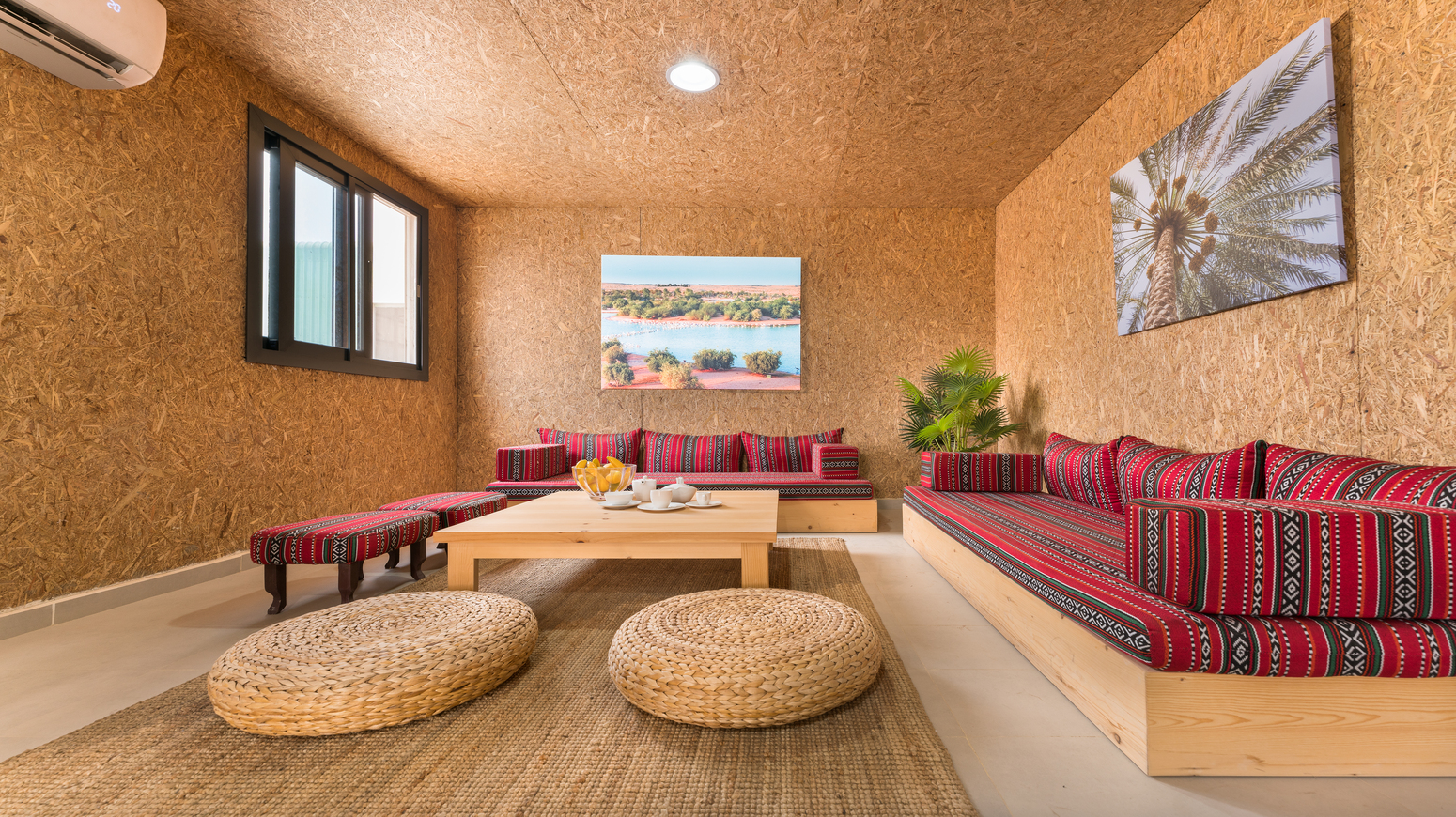
One of the defining characteristics of engineered joinery is material intelligence. Abanos works with Palm Strand Board (PSB®), a locally manufactured, palm-based engineered wooden board, known for its superior resistance to moisture, fire, and wear, while reducing reliance on conventional solid wood. By sourcing PSB® as well as other responsibly sourced woods—all FSC-certified—Abanos ensures uniformity across all joinery elements, enabling designers and contractors to achieve consistent finishes on large-scale projects without the variability of natural timber.
By integrating engineered, sustainable materials, Abanos not only enhances efficiency and precision in fabrication but also supports environmental goals—an increasingly critical factor across industries and development projects in the UAE and the wider region.
Precision Manufacturing and Value Engineering
Engineered joinery is as much about process as it is about materials. Abanos’ manufacturing approach emphasizes precision, repeatability, and value engineering. Digital design integration, CNC fabrication, and modular production techniques allow complex joinery elements to be produced accurately, reducing site errors, installation time, and material waste.
This method not only enhances quality but also enables Abanos to deliver cost-effective solutions without compromising design intent—an essential requirement for large, fast-paced developments.
Meeting Modern Performance Standards
Today’s interior environments are required to meet increasingly stringent performance benchmarks—spanning fire safety, acoustics, durability, and long-term material stability—alongside growing expectations around environmental responsibility. Engineered joinery solutions make this level of compliance achievable without compromising design intent or finish quality.
At Abanos, these requirements are addressed through a performance-led and sustainability-conscious approach to joinery delivery. The use of advanced engineered boards has enabled measurable environmental outcomes across projects, while ensuring alignment with project specifications, regulatory frameworks, and end-user expectations—whether in hospitality, residential, commercial, or mixed-use developments.
To date, Abanos has incorporated 3,989 engineered boards—equivalent to 235 m³ of material—across its joinery projects, contributing to the capture of approximately 4 million kilograms of CO₂ equivalent while enabling the storage of 1.1 million kilograms of biogenic carbon. These quantifiable results demonstrate how engineered joinery, when applied at scale by Abanos, can actively support sustainability targets while maintaining technical performance.
A Smarter, More Sustainable Way Forward
The transition from conventional to engineered joinery represents a broader industry shift toward smarter, more responsible construction practices. By embracing engineered solutions, the industry reduces material waste, enhances lifecycle performance, and supports sustainable sourcing—without losing the bespoke character that defines quality interiors.
Positioned at the forefront of this evolution, Abanos brings together craftsmanship and engineering, tradition and innovation. Through advanced materials, precision manufacturing, and a deep understanding of contemporary project demands, Abanos continues to redefine the potential of joinery within today’s built environment.